
English Monarchy
The list of kings and reigning queens of the Kingdom of England begins with Alfred the Great, who initially ruled Wessex, one of the seven Anglo-Saxon kingdoms which later merged to become England.
List of the Kings and Queen of England
Indexed Kings and Queens of England follow. The English Monarch was succeeded by the British Monarchy after the act of Union with Scotland in 1707.
| Name | Reign | Notes |
|---|---|---|
| Henry II of England | — 1189 AD | |
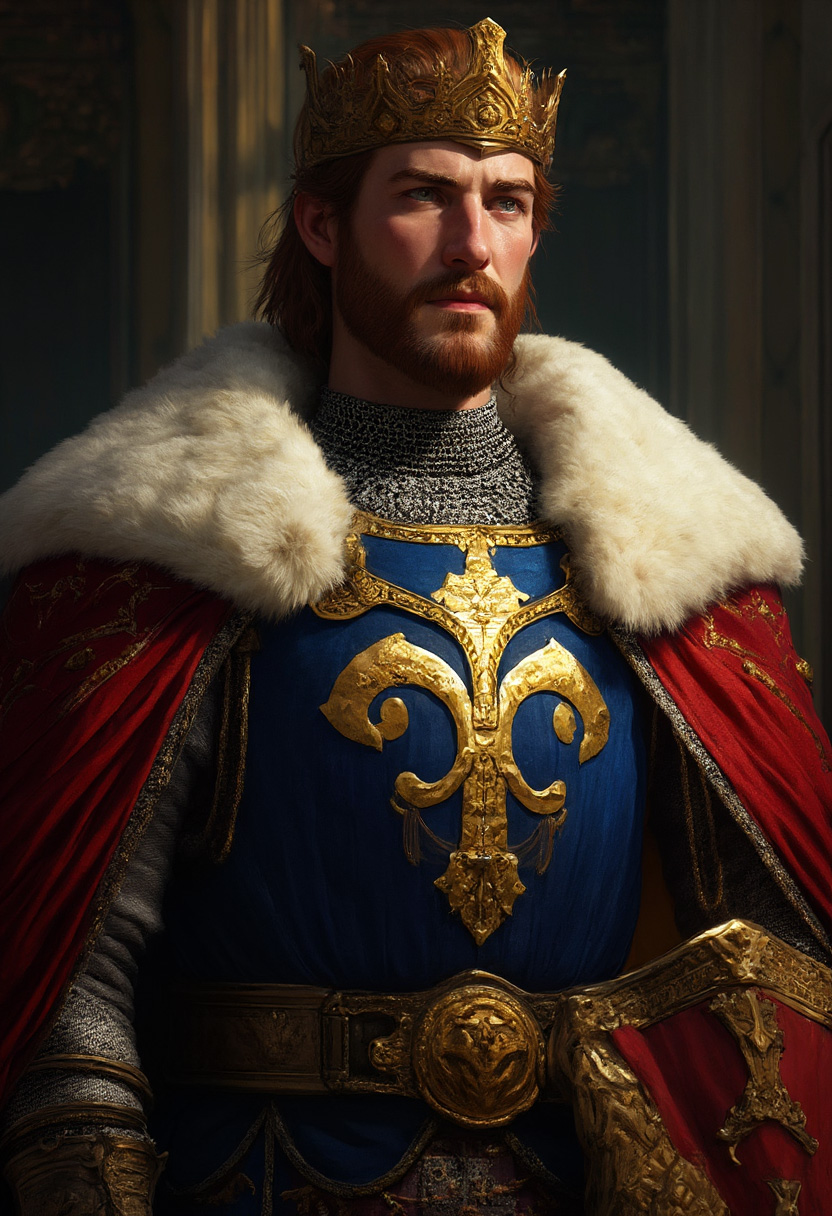
| Richard I of England | 1189 AD — 1199 AD | Known as the Lionheart. |
| John of England | 1199 AD — 1216 AD | Last Angevin king |
| Henry III of England | 1216 AD — |
Realworld Counterpart — This Codex Entry describes a fictionalized account of a real person, location, or event. More information about the real world version of this individual or topic can be found at the following resources:
Timeline for English Monarchy
-
Historical, The European Middle Ages Richard the Lionheart born
-
Historical, The European Middle Ages Prince John is born
-
Folklore and Legends, Historical, Pseudo-Historical, The European Middle Ages Accession of King Richard (I) of England
Prince Richard (32) is crowned King Richard I of England. Robert Fitzmalcolm, 6th Earl of Huntingdon swears allegiance to the new King. The two are close in age, and Robert becomes one of Richard’s trusted military commanders.
-
Historical, Literary, The European Middle Ages Start of the Third Cruasde
King Richard I of England (33) and King Philip II of France agree to combine their armies for the Third Crusade. Their forces begin their journey to the Holy Land from France. He is joined by his trusted advisor Robert Fitzmalcolm (30). Amongst the other knights in Richard’s army is Wilfred of Ivanhoe (28), who joins the Crusade against his father’s wishes. Sir Wilfred is from Ivanhoe: A Romance (Walter Scott, 1819).
-
Historical, The European Middle Ages Marriage of Richard I of England and Berengaria of Navarre
King Richard I of England (34) marries Berengaria of Navarre during a stopover at Cyprus. He then departs for the Holy Land, joining the Christian forces at the Siege of Acre.
-
Pseudo-Historical, The European Middle Ages Robert Fitzmalcolm sent back to England
King Richard I of England (35) becomes increasingly concerned about the situation in England and the growing threat to his reign posed by Philip II of France and his brother Prince John (26). He dispatches Robert Fitzmalcolm (32) ahead of him to prepare for his return to England.
-
Historical, The European Middle Ages Richard I leaves the Holy Land
King Richard I of England (35) departs the Holy Land, leaving the crusade unfinished. His departure is driven by concerns over the political situation back home in England and France.
-
Historical, The European Middle Ages Richard I of England captured
On his way back to England, King Richard (35) is shipwrecked and forced to travel overland through Europe, where he is captured by Duke Leopold V of Austria, near Vienna.
-
Literary, Pseudo-Historical, The European Middle Ages The return of the Lionheart
King Richard the Lionheart (37) returns to England. His first priority is to reclaim his throne and secure his authority, which had been threatened by John’s rebellion and Philip’s incursions in Normandy. Disguised as the “Black Knight”, he rallies his supporters in secret. Together with the supporters of Robin Hood (Robert Fitzmalcolm) (34), the Black Knight storms the castle Torquilstone, freeing Wilfred of Ivanhoe, Isaac of York, Rebecca of York and other loyalists who had been held captive there. The events of Ivanhoe: A Romance (Walter Scott, 1819).
-
Historical, Pseudo-Historical, The European Middle Ages King Richard re-establishes his authority
King Richard I of England (37) defeats Prince John (28) and his supporters, re-establishing control over England. He pardons the loyalists who have supported him, including Wilfred of Ivanhoe (32) and Robert Fitzmalcolm (34), but also his brother John, whose support he continues to need. However, he focuses on reclaiming his French territories.
-
Historical, The European Middle Ages Richard I campaign in France
King Richard I of England (37) departs England for France to engage in campaigns against Philip II of France. He spends the rest of the year fighting to recover Normandy and other lands lost to the French during his captivity.
-
Folklore and Legends, Historical, Pseudo-Historical, The European Middle Ages Death of Richard; Accession of King John
Richard the Lionheart (42), with Robert Fitzmalcolm's (39) support, was on the way to retaking his lands in France when a French crossbowman kills him with a lucky show. The Lionheart is succeeded by his brother Prince, now King John. Relations between John and Robert Fitzmalcolm remain frosty, but John recognises that he needs Robert too much as a military commander.
-
Pseudo-Historical, The European Middle Ages Excommunication of King John
Pope Innocent III excommunicates King John (42) after a dispute over the appointment of the Archbishop of Canterbury. Robert Fitzmalcolm (48), a devout Christian and a loyal supporter of the Church, is further alienated from John’s rule. Secretly, he increases his support for rebellious barons.
-
Historical, Pseudo-Historical, The European Middle Ages Start of the Barons War
King John (47) reconciles with the Pope Innocent III, agreeing to make England a papal fief. Robert Fitzmalcolm (53) and other barons view this as a sign of John’s growing weakness. The tension between John and the northern barons, including Robert, intensifies, leading to the Barons’ War.
-
Folklore and Legends, Historical, Pseudo-Historical, The European Middle Ages Magna Carta
A group of 26 English Barons, including Robert Fitzmalcolm (55), 6th Earl of Huntingdon, force King John to sign the Magna Carta and accept legal oversight of his powers for the first time. Robert is one of the barons to go into open revolt as part of the War of the Barons when John fails to uphold the Magna Carta.
-
Folklore and Legends, Historical, Pseudo-Historical, The European Middle Ages Death of King John; Accession of King Henry III
King John dies and is succeeded by Henry III. Earl Marshal William Marshal, the King’s military commander, manages to get the rebels to one-by-one switch sides. Robert Fitzmalcolm (56) reluctantly agrees to do so.
| English Monarchy | |
|---|---|
 |
Leave a Reply