
Kublai Khan
Contents
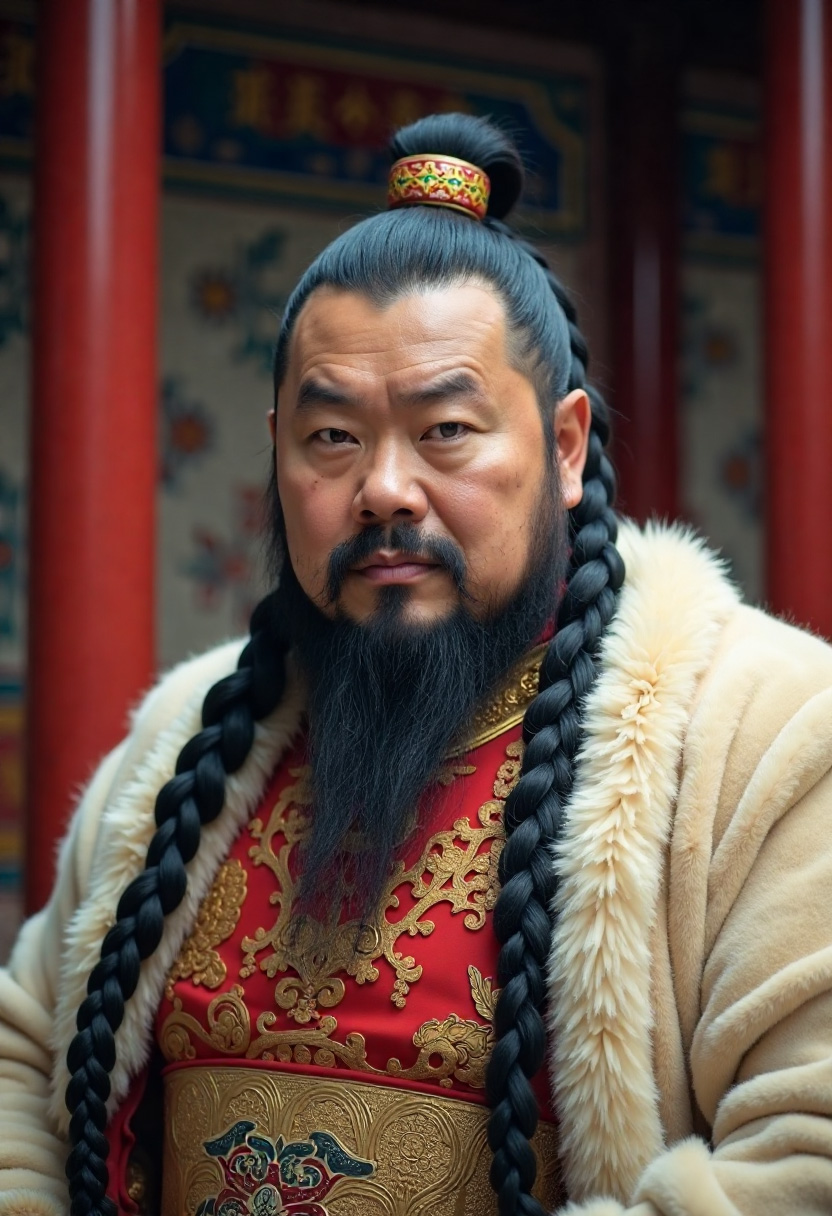
Kublai Khan was the fifth and last true Great Khan of the Mongol Empire. He emerged as the most powerful ruler of the Mongol Empire’s second generation, transforming himself from a steppe warrior into a Chinese-style emperor. Following the death of his brother Möngke Khan in 1259, Kublai claimed the title of Great Khan against his younger brother Ariq Böke, leading to a four-year civil war that fundamentally altered the empire’s structure. Though he emerged victorious in 1264, his authority over the western khanates remained largely nominal, with the Golden Horde, Chagatai Khanate, and the Ilkhanate functioning as essentially independent realms. Rather than pursuing the impossible task of ruling the entire empire from the steppes, Kublai decided to establish his capital at Xanadu and focus on the conquest of China.
Under Kublai’s rule, the Mongol Empire reached its greatest territorial extent, even as it transformed into a more traditional Chinese-style state. In 1271, he proclaimed the Yuan Dynasty, adopting Chinese political institutions while maintaining distinct Mongol characteristics. The presence of the Fairfolk seer Nimue as his chief advisor (documented from 1265) added another layer to this cultural synthesis, though her role remained unknown to most chroniclers. Despite an assassination attempt orchestrated by the Order of Shadows and facilitated by Marco Polo in 1275, Kublai maintained an open and cosmopolitan court, welcoming traders, scholars, and diplomats from across Eurasia. The completion of his conquest of the Song Dynasty in 1279 marked the first unification of China under foreign rule.
By the time of his death in 1294, Kublai Khan had transformed the nature of Mongol rule, creating a hybrid cultural and political system that would influence East Asian history for centuries. While this transformation ensured the longevity of Mongol rule in China, it also marked the definitive end of the united empire envisioned by Genghis Khan. The four khanates that emerged – Yuan China, the Ilkhanate, the Golden Horde, and the Chagatai Khanate – would increasingly follow their own paths, though maintaining nominal allegiance to the Great Khan in Xanadu.
Realworld Counterpart — This Codex Entry describes a fictionalized account of a real person, location, or event. More information about the real world version of this individual or topic can be found at the following resources:
Timeline for Kublai Khan
-
Historical Birth of Kublai Khan
Kublai Khan, the eldest son of Tolui (24) and Sorghaghtani Beki, is born in Mongolia
-
Historical Mongol Succession Crisis
Möngke Khan (50) dies. His succession is contested between his brothers Kublai Khan and Ariq Böke, causing several rounds of civil war amongst rival claimants to be the Great Khan.
-
Historical Mongol Defeat
The Mongols suffer a significant defeat at the Battle of Ain Jalut against the Mamluks in Egypt, marking the first major halt to Mongol expansion westward. Hulegu Khan’s westward advance halts following the death of Möngke Khan, as Mongol forces are recalled for the succession dispute. Kublai Khan (45) declares himself Great Khan, starting a period of civil war within the Mongol Empire.
-
Historical Ilkhanate formed
Kublai Khan (49) emerges victorious in the Mongol civil war, consolidating his rule and shifting the Empire’s focus towards China. In the West, Hulegu Khan establishes the Ilkhanate, a semi-autonomous Mongol state centered in Persia, which has increasingly tense relationships with the Golden Hoard, its northern rival. Each is nominally still vassal to the Great Khan.
-
Pseudo-Historical Madame Xanadu at Xanadu
The Fairfolk seer Nimue visits the court of Kublai Khan (50) at Xanadu. She rises to become a trusted advisor and his chief seer. Mentioned in Madame Xanadu #3 (Matt Wagner, Amy Reeder Hadley, Oct 2008)..
-
Historical, Pseudo-Historical Marco Polo serves Kublai Khan
Marco Polo (21) arrives at the court of Kublai Khan (60), known in the West as Xanadu, and delivers Pope Gregory X’s letters to the Great Khan. An attempt on the Khan’s life by Marco’s associates in the Order of Shadows is thwarted by the Khan’s seer, Nimue. She escapes with help from a Stranger. The Great Khan is unaware of Marco’s involvement and begins his service to the Khan as an emissary and investigator. A version of events from Madame Xanadu #3-4 (Matt Wagner, Amy Reeder Hadley, Oct 2008).
-
Historical, Pseudo-Historical Marco Polo concludes his service
Marco Polo (38), the Order of Shadows agent in the Mongol Court, is told of an escalation in the Order’s activities. He is warned to leave and receives permission from Kublai Khan (77) to return west as the chaperone of a Mongol princess being sent to one of their western Khans.
-
Historical Death of Kublai Khan
Kublai Khan (79) dies; the Mongols begins fragmenting into semi-autonomous khanates, including the Yuan Dynasty in China, the Ilkhanate in Persia, the Chagatai Khanate in Central Asia, and the Golden Horde in Russia.
| Kublai Khan | |
|---|---|
 | |
| Mongol Empire | |
| Reign | 1260 AD – 1294 AD (Fifth Great Khan, son of Tolui and brother of Möngke Khan) |
| Predecessor | Disputed. |
| Biographical Data | |
| Species/Race | Human |
| Gender | Male |
| Born | 1215 AD Mongolia |
| Died | 1294 AD (aged 79) China (Diabetes) |
| Family | |
| Father | Tolui |
| Mother | Sorghaghtani Beki |
| Siblings | Möngke Khan |
| Affiliation | |
| Allegiance | Mongol Empire Yang Dynasty |
| Religion | Buddhism |
Leave a Reply